
Chatting with Miah O'Malley
Miah discusses her past career in hospice care, and the lens of class and lived experience in science fiction.
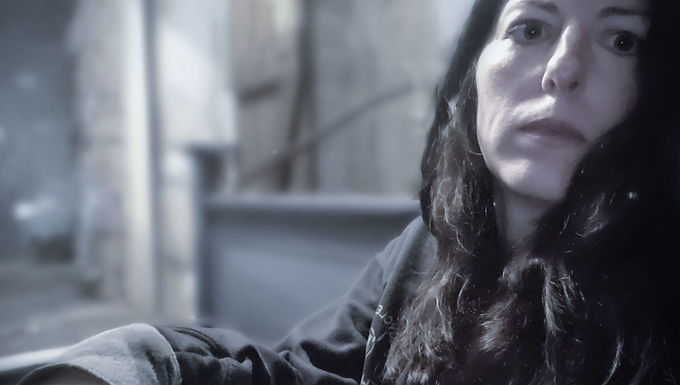
Miah O’Malley is a speculative fiction writer whose work explores altered consciousness and identity. She holds an MFA in creative writing from Vermont College of Fine Arts and a master’s in nursing from Loyola University. She was selected for AWP’s Writer to Writer program and has work forthcoming in Exposed Bone, Graveside Press's Wichelen Anthology, Tethered Literary Journal, and Hyphen Punk.
Miah is the author of “Sleepholder” from Issue 11.
Her website is miahomalley.com.
Q: In “Sleepholder” you end with a final image of the sleepers waking. What kind of world do you imagine they’re building?
I don’t imagine them building a perfect world. The sleepers wake into a landscape scarred by neglect and greed, and they carry with them everything that was meant to be forgotten—the grief, the rage, the tenderness that survived. They build with those materials. They remake the scaffolds of power so that no one’s value depends on how much they can produce or how quietly they can disappear when they are deemed inconvenient.
It’s a world where revolt is about creating space for the kind of futures we were told are impossible.
Q: Your story begins intimate and subdued, but escalates by the end toward large-scale revolution. How did you balance that transition in the story?
I wanted the revolution to feel inevitable, like a pressure that’s been building under the surface all along. The story starts in the smallest possible space: one room, one dying body, one woman doing a job she’s learned not to question. But even in that intimacy, the machinery of the larger world is already present in the clinical language, the economic cruelty, the quiet ways people are erased.
So I wrote the escalation as an unfolding from what is personal to her. That personal rupture widens into something larger. In the history of revolutionaries I admire, the personal and political become indistinguishable.
Q: As you build out your author website, what lessons are you learning that other authors creating their site might learn from?
The most meaningful author sites I’ve seen don’t posture, they invite. They reveal the questions the writer is wrestling with, the obsessions that fuel the work. That kind of honesty builds trust, and I think trust makes someone want to keep reading. This is something I’m currently learning how to do.
Q: What do you believe are the edges that make up being a human?
I think being human has always been defined by our edges, the points where we have to decide what we’ll become. Some of those edges are physical: bodies, illness, mortality. Some are cognitive: memory, imagination, the limits of what our minds can hold. And some are ethical: how far we’re willing to go in pursuit of greatness before we lose something essential.
Transhumanism fascinates me because it asks about those boundaries. It asks whether consciousness, identity, and love still mean the same thing when the body is no longer a fixed container—when memory can be uploaded, when death can be circumvented, when the line between self and system blurs. I don’t see that as a rejection of humanity so much as a continuation of it. We’ve always been a species that builds tools to extend ourselves, even basic things like fire, language, and medicine. But every extension comes with the question, What part of us do we risk losing?
To me, the edges of being human are less about what we are and more about how we navigate that, how we carry empathy, responsibility, and wonder with us as we cross into new territory.
Q: Your nursing background features heavily in “Sleepholder.” Did you draw on personal experience for its opening scenes?
Yes. I’ve spent years working as a hospice nurse, and those experiences are in every line of the opening. There’s a kind of suspended time at the end of life where the small, human gestures matter as much as the medical tasks. I wanted the story to begin there, in that intimate, liminal place where I’m attuning to my patient and what they need to complete this life in a way that is dignified and peaceful, that allows their life to feel meaningful. It’s interesting and strange work because this is a mixture of pharmacology, saying the right things, and the act of bearing witness.
Q: If the technology from “Sleepholder” existed in our world, would you use it when you died?
A part of me is wary. The intimacy of dying is sacred—it belongs to the person crossing over and to the people who love them. Introducing technology into that space risks turning it into a transaction, or worse, a product. My job is, in part, a struggle against commodifying care. On a personal scale, this is hard for nurses, because they have to put some distance between their emotions and this job in order to survive the sadness of it.
Q: What was the transition from hospice nurse to MFA like for you?
It was surreal, honestly. Hospice work is intense in a way that rewires your sense of perspective—you spend your days holding hands at the edge of life, getting bled on, vomited on, crying in the bathroom between calls while your work phone won’t stop buzzing. After that, walking into an MFA residency felt almost like stepping onto another planet.
Because of that contrast, I’ll argue with anyone who says writing is hard. Writing is a privilege. It’s joyful, sustaining work—a space where I get to think deeply, play with language, build worlds, and sit with ideas instead of emergencies. It’s not an opportunity everyone gets, and I don’t take a second of it for granted. The MFA program felt like a gift.
Q: Tell us about the 75,000-word literary science fiction novel you are currently querying?
The novel I’m querying, Nightbloom, is a literary science fiction story about consciousness, memory, and the boundary between neuroscience and mysticism, between what we can measure and what we can only experience. The protagonist is Dr. Amanda Ely, who isolates a compound from a rare night-blooming flower that triggers a brief, reproducible separation of mind from body. What begins as a controlled experiment becomes far stranger when her trauma survivors in a clinical trial report not just visions, but shared experiences in the same vividly coherent, impossible place.
The work forces her to question what consciousness is and where it resides, whether memory might exist outside the body, and whether human connection might be phenomena we participate in rather than possess.
At its heart, Nightbloom is an argument that the people society has discarded, those living with trauma, mental illness, or fractured realities, might hold the key to what humanity becomes next. Their altered ways of perceiving and surviving could be glimpses of capacities we’ve pathologized instead of understood. I hope that idea makes some people uneasy. It challenges who we decide is valuable, who we listen to, and what kinds of minds we believe are worthy.
Q: What is your relationship to transhumanism?
I think of transhumanism less as a distant sci-fi concept and more as a mirror held up to our oldest impulses, the desire to extend beyond the limits of what a human body or mind can do. My relationship to it is complicated. I’m deeply curious about how technology might expand our capacities for empathy, memory, or connection. I’m fascinated by the ways we might integrate biology and machine to reimagine what a self can be.
But I’m also wary, because the story of progress has never been neutral. It’s always been shaped by power: who gets access, whose bodies are experimented on, whose lives are considered worth improving. I’m less interested in the fantasy of perfect, immortal beings and more in the question of who gets left behind in pursuit of them.
For me, the most radical vision of transhumanism isn’t about becoming superhuman, it’s about becoming more humane and more ethical as a society.
Q: With another half -dozen short story publications under your belt and an MFA, where do you plan to go next?
Honestly, I just want to keep writing and putting ideas and questions into the world and see who they find. What matters to me is using my voice to talk about the things we’re often taught to hide: grief, loneliness, sadness and acknowledge the universal experiences that all of us will experience.
I also feel a pressing responsibility to share what I’ve learned with people who are usually shut out of literary spaces. So much of the writing world is built around privilege—who you know, how much you can pay, what rooms you’re allowed into. I want to share what I have learned with other people who aren't going to be offered opportunities like a writing program or expensive writing workshops geared toward people from "elite" writing backgrounds where things like "networking" and "who you know" are considered important. I want to help dismantle that completely, in fact.
Next month I’m leading a workshop at my local library, where regular people can turn their own technical knowledge and work experience into fiction. Stories about chemical engineers, line workers, welders, and nurses are rich with speculative possibility. If I can help someone who’d be told writing isn’t for them find their voice, that will be meaningful work to me.